1. New Tools: Streamlining the Design and Construction Processes
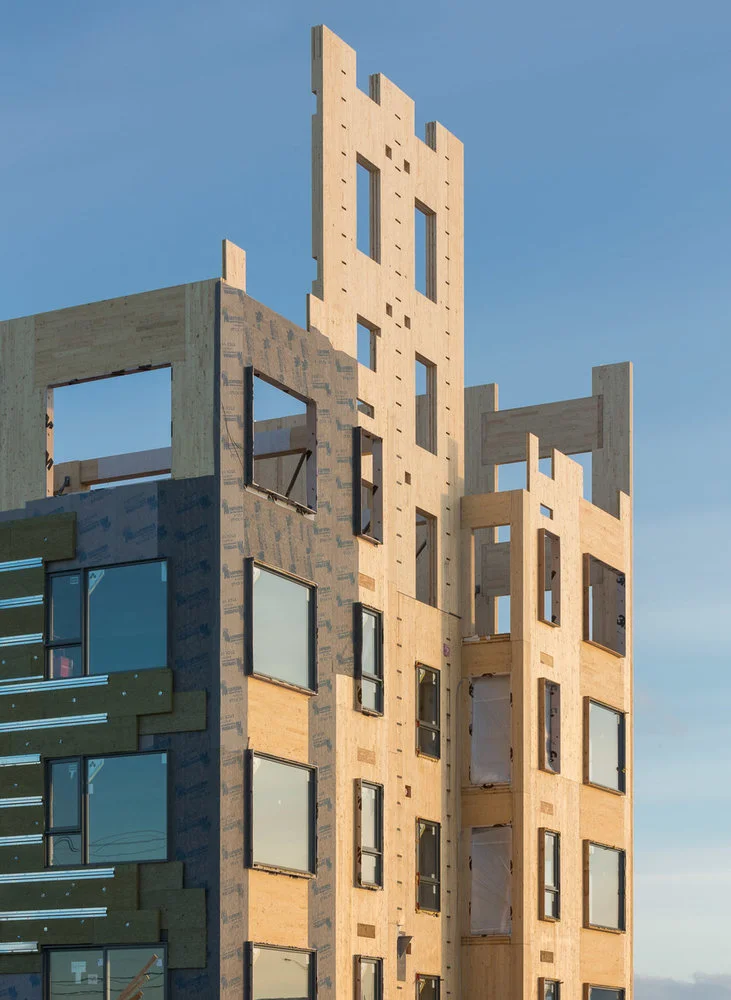
Technological advances are changing the rules of the game as we know it and will only continue to expand the possibilities of building materials over the next few years. Tools and methodologies such as BIM, Virtual Reality, and 3D modeling and printing have begun to blur the border between design and construction, and are currently intertwined in a single major process of conceiving and developing new buildings.
2. Cutting-edge Technology: Millimeter Manufacturing, Modular Systems, and New Materials
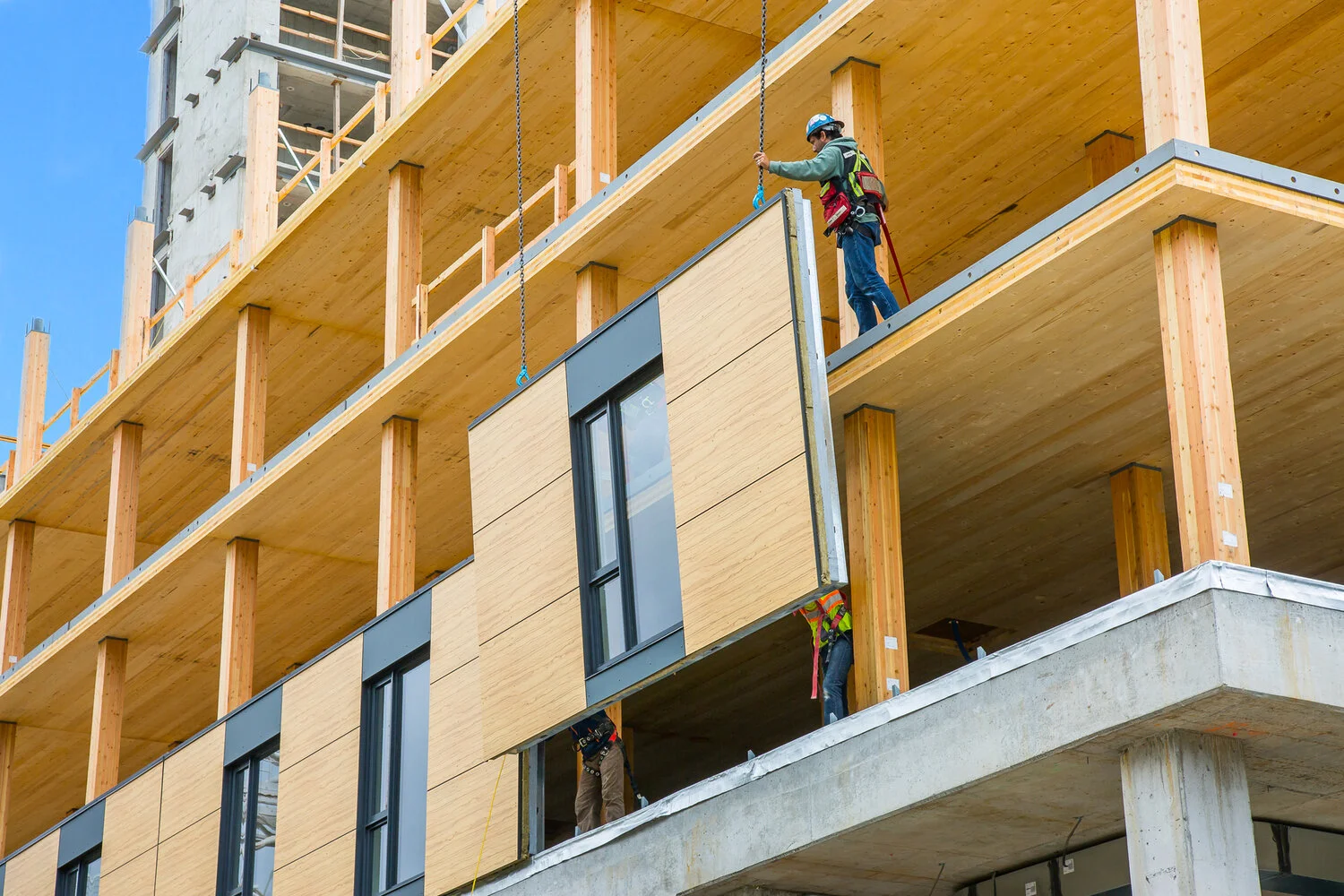
New technologies and systems are transforming the traditional job of carpenters, replacing their tools and processes with innovative machinery and assembly methods. CNC Machines, for example, allow beams and panels to be machined, in addition to generating custom components. They are operated by computational commands and allow the cutting, milling, and engraving of pieces of wood with a high level of precision through coordinate axes. These parts, then, can more effectively be joined through structural connectors, anchors, and fixing systems.
3. New Business Models: Integrating the Project Life Cycle in a Single Process
The total integration of design, engineering, materials and construction —and the new technologies that drive them more efficiently than ever —has led to the emergence of new business models, such as the End-to-End New Build service delivered by Katerra.
4. Changes in Building Codes: Breaking Myths and Expanding Possibilities
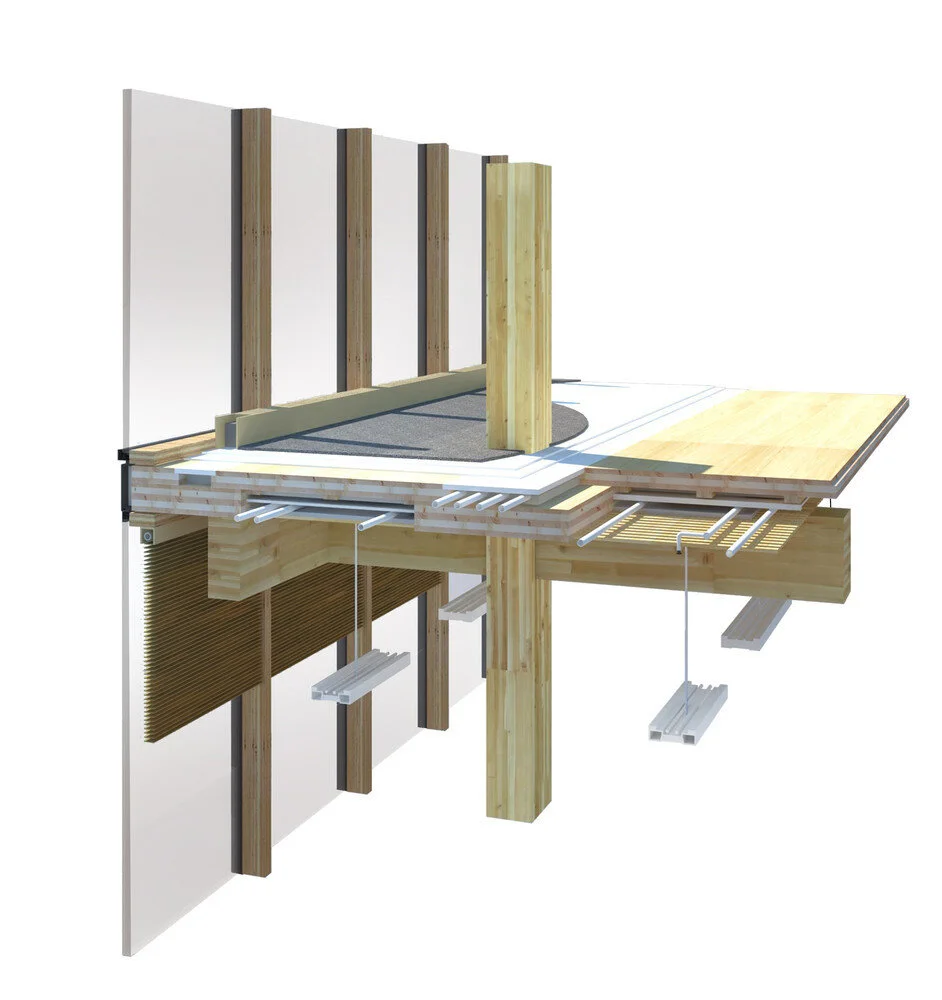
Important changes were made to the International Building Code when it comes to timber, set to take effect in 2021, including three new types of construction: buildings of up to 18 stories, with elements of mass timber covered with plaster (Type IV-A), buildings of up to 12 stories, with walls and ceilings of limited exposed mass timber (Type IV-B), and buildings of up to 9 stories, with 2 hours exposed fire-resistant mass timber (Type IV-C).
5. Climate Action Policies: Governments Boost the Use of Timber
Global concerns to mitigate climate change have prompted some cities and governments to consider the embodied emissions of the materials we use to construct buildings, particularly the sum of all the energy required to extract, process, manufacture, transport, build, and maintain each material. With this consideration in mind, timber appears to be an attractive option, since according to many studies it can achieve less embodied and operational emissions in comparison to concrete and steel. In addition, the prefabrication of timber components with precision can deliver a highly efficient building envelope that improves insulation, saves on heating and cooling and minimizes thermal bridging.
6. Biophilic Design: Reconnecting Humans with the Natural
The use of timber in interior spaces can be one of the most direct ways to motivate a 'connection' between people and nature, especially when the timber maintains its most rustic and textured state. As we previously described, biophilic design seeks to improve the well-being of humans through direct contact with nature and organic forms, avoiding straight lines and 'aseptic' spaces. According to Nikos A. Salingaros and Michael W. Mehaffy, "we seek legibility and meaning in our environment, and we are repelled by environments that don't give us meaning." Thus, the rustic inconsistencies and variable tones of timber pieces can be integrated with indoor plants, living walls, colors, and other raw materials, enhancing the space with adequate ventilation and lighting as well.
Caboolture GP Super Clinic / Wilson Architects. Image © Alex Chomicz
7. Ongoing Research on Timber's Performance is Expanding its Possibilities
The design of increasingly tall wood structures will continue to drive the development of research and experiments that will improve the accuracy of emergency responses, developing construction codes worldwide to become more comprehensive as well. Check out some recent studies here.
See the original article here.