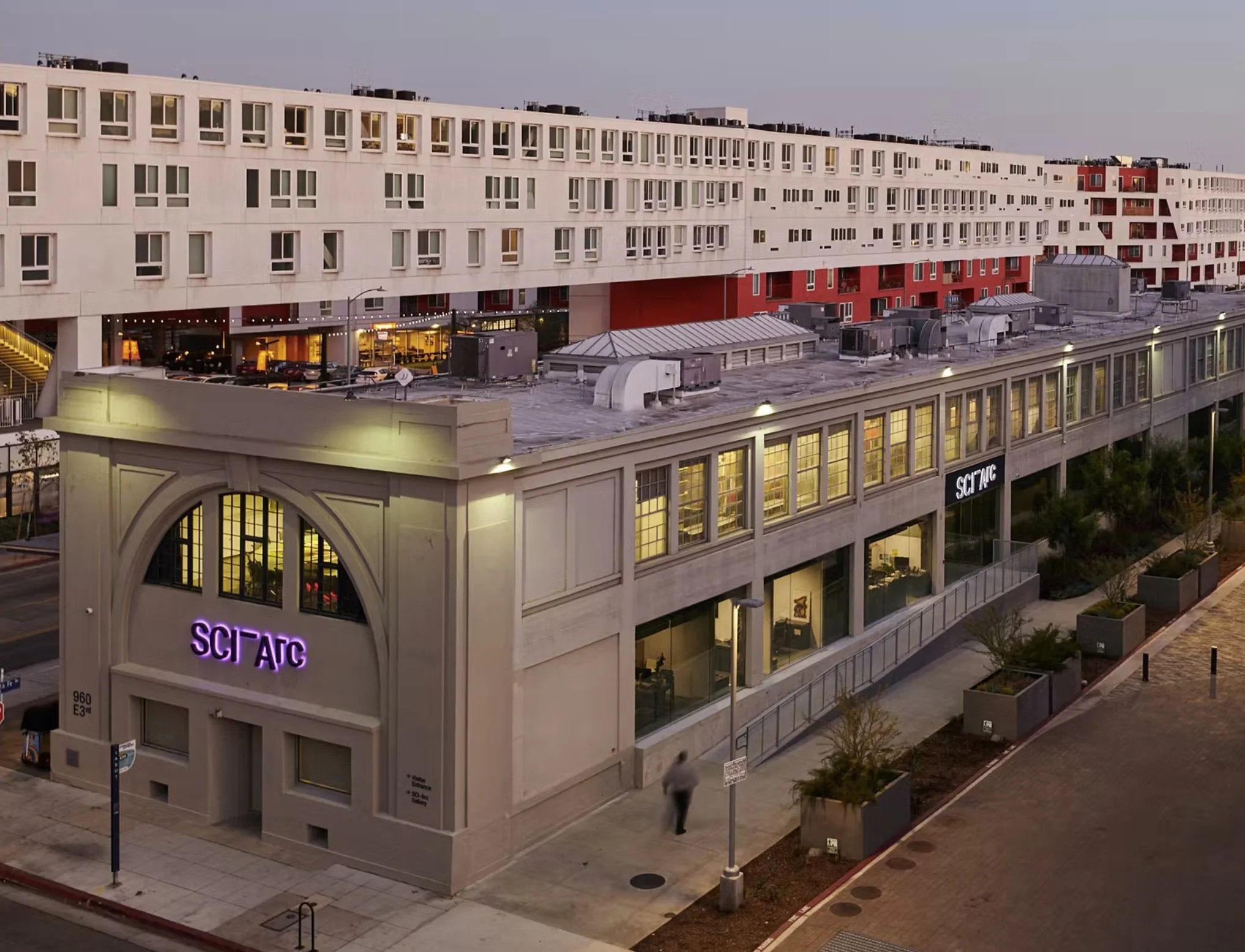
On Friday, March 25th, a panel discussion became a lightning rod striking attention to the questionable ethics of architectural academia and professional practice. Depending on what news and social media platforms you follow, keeping track of the events that followed SCI-Arc's Basecamp lectures can appear like organized chaos.
Everyone has an opinion. Everyone has a "take" on the highly controversial and unsettling comments. But before I dive into what's already been documented and shared across the internet, it's vital to address the larger issues. Discussions surrounding work and studio culture within the architecture community are nothing new. It would be foolish to say that those working within the industry at both the professional practice and academic levels are unaware of the highly problematic issues of labor and equitable working conditions.
Ongoing efforts to reform toxic and exploitative work environments have been pushed to the forefront thanks to organizations like The Architecture Lobby, the Future Architect's Front, Architectural Workers United, NOMA, and many others. However, what took place during SCI-Arc's latest lecture, Basecamp: How to be in an office, brought to light what the industry continues to gatekeep systemically — the allowance of unacceptable labor conditions, exploitative internships, the allure of working for industry icons, and the celebration of "architecture's high-culture elite."
Panel Discussion is Streamed, Eliciting Harsh Feedback from the Architecture Community - Friday, March 25th
It was like watching one of those "what could go wrong" fail compilation videos. That's how I would preface it to anyone who still hasn't watched the live-streamed event from last Friday. Each passing minute of this panel discussion echoed the misguided and failed system of fostering ethical work cultures for architecture. I want to preface that watching the entire panel discussion is challenging to get through, to say the least. The questions and responses given to students were short-sighted. While many might suggest this as an overreaction or inflated response, all are more than welcome to watch the live-streamed video, which is still available to view on SCI-Arc's Youtube channel, to experience it for yourself.
The 1-hour, 23-minute discussion between three SCI-Arc faculty members (Marrikka Trotter of Tom Wiscombe Architecture, Margaret Griffin of Griffin Enright Architects, and Dwayne Oyler of Oyler Wu) started by announcing this would be a topic of great interest to students. While this panel was geared towards undergraduate students, Trotter started by saying, "everyone who is at the school at all levels" will be interested in this discussion because "at some point you do graduate. Then the question is, what happens next and what is your strategy for that phase in your life." Let's be clear there were some takeaways that followed after the 00:07:40 mark that could be deemed helpful. At 00:27:00, Trotter expressed to students that "there are many ways to be a part of the architecture," which in itself is a promising message. Starting at 00:30:00 discussion of graduate school came up and the three bounced off each other with their own personal takes on the benefits and realities of taking time off after undergrad and working vs. going straight into graduate school. Eventually leading to the financial aspects of pursuing higher education, which is another can of worms that has been discussed frequently on Archinect.
Not everyone has the time to go through this video. And while many are aware of the conflicting results of this panel discussion, what exactly were the comments that ignited so much attention and sparked issues of unethical work cultures? Below is a quick take with timestamps of where you can jump into topics that opened a pandora's box of follow-up responses.
00:21:00 Griffin shares her experience with working at a firm that perpetuated a "fear of being fired."
00:41:28 – 00:43:35 Discussions continue about the financial aspects of grad school which lead to the infamous "you'll spend an hour working on bathrooms" comment.
00:42:49 The breakdown of what the difference is between a design "boutique" office and corporate offices and why pay rates are different. The comment of smaller offices paying less because their fees are less sparked discussion, with many highlighting that this comment perpetuates further gaslighting within the industry.
00:43:20 Trotter shares this comment that begins to set an even more questionable tone, reinforcing the rhetoric of unethical working conditions and expectations students should accept when entering the workforce. "...is it like a 40hr workweek that you can barely get through or is it a 60hr work week that you can't wait to start every day. So you've got to choose your poison on that one. You're still making money as opposed to paying money..."
00:44:00 Conversation on the subject of commitment and what that means for students. "When you commit to a project, to a firm, when you commit to a principal, and you really invest, then I guarantee you they will invest in you. They will pay you as much as they possibly can and be happy to do it," explained Trotter with much fervor. "Now does that mean you’ll be a millionaire in your first 10 years…probably not, but will you feel like you’re living a passionate and fulfilled life…yes. And honestly, I think it’s worth the investment."
As I continued to watch, more red flags emerged. Comments being shared by these three experienced practitioners were starting to highlight problematic work culture and work expectation issues that should be aimed at reforming instead of positioning as "commonplace" and acceptable.
00:50:00 – 00:54:00 Discussions finally led towards hiring. Oyler expressed the notion of recognizing the difference in paying for education now vs. when he was in school. Griffin exclaims the mindset of "the side hustle" then followed by her own applications of optimism and the idea of "getting sh!t done" quite repeatedly. Not to mention her talks of wanting to go to space, which has now become a part of social media commentary.
00:55:25 – 00:56:00 Oyler tries to bring the conversation back to working in the office by referencing the types of people who "get sh!t done" as Griffin harped. They discussed the idea of employees who go the extra mile to solve problems and use the comparison of emailing vs. using the phone to "get sh!t done." What followed was a comment by Trotter stating "By the way, the person who figures that out (referencing the "get sh!t done" at whatever costs mentality) those are the people who get raises. All three panelists continued to echo the value of becoming an employee who "gets sh!t done," which could be interpreted I many different ways...but at what cost?
00:57:05 The floor was now open to questions from students. There is, even more, to unpack here that might be the cherry on top for why this panel has become problematic. You can skip ahead to 01:08:00 where a student rightfully disagreed with the panel's idea of commitment and where the industry falls behind. At 01:16:50 a student who was looking for answers about how the system is set up with students, after graduating work for unlivable wages, having to side hustle to make ends meet, a case for international students who can't work outside of school, and what they make. This student makes a poignant point addressing Griffin's comments stating "there's no way students can afford SCI-Arc just to side hustle..."
The intention of this panel discussion was for three seasoned practitioners and faculty members to share their insights and perspectives on "how to be in an office." And perhaps during their conversation, let's lend them the benefit of the doubt that maybe they truly did think they were being helpful. But as the saying goes, hindsight is always 20/20. Unfortunately, the damage was done. What resulted were statements fostered by misguided rhetoric of working conditions and expectations that the industry must agree to reform. To help break down the issues with this discussion even further I'd like to highlight a summary provided by Architecture Twitter's unappointed conservator of professional practice, The Hustle Architect (@VitruviusGrind). In his latest Substack, entitled "We all make our own choices," he eloquently dives into the disappointing and jarring "tips and responses" given to undergraduate students and those watching during the discussion.
SCI-Arc Begins Damage Control - Monday, March 28
Friday's lecture eventually caused a domino effect in responses and outcries. SCI-Arc students and alums quickly mobilized to address these issues at the school. Soon a petition for the removal of Tom Wiscombe and Marrika Trotter began to circulate through social networks. (Note: On March 30th, it was addressed by SCI-Arc's Student Union (STUN) that it was not started by STUN, "but rather by an independent group of students, alumni, and faculty who wish to remain anonymous for their protection.")
To start the process of atoning for the transgressions that occurred, SCI-Arc leadership set up an All School Town Hall on Monday, March 28th, to give students the floor and discuss Friday's failed panel discussion openly. While the Town Hall was not recorded or live-streamed, the outcomes from that meeting took another unfortunate turn.
As students shared their comments and personal anecdotes to present faculty, responses like one from a notable architecture leader stood out. According to sources who witnessed the Town Hall, the rather iconic architect and notable faculty member sadly made a myopic response, invalidating the students' concerns. The distinguished faculty member preached the outdated adage "it's always been this way." Further perpetuating the idea of academia and professional practice appealing to tradition. These practice models are outdated, but what will it take for established architects and veteran firm leaders to see the bigger picture and the changing environment of architectural practice?
Between Monday's Town Hall and Wednesday morning, the school dispatched responses to the community stating actions were being made to address the residue left from Friday's panel. Then a letter from SCI-Arc's Director and CEO, Hernán Díaz Alonso, stated that actions had been taken to place Marrikka Trotter and Tom Wiscombe on administrative leave while formally investigating the remarks and allegations of misconduct.
A lot can happen in a few days. The architecture community took it upon themselves to create further discourse. News quickly began to circulate from the recognizable #HowNotToBeInAnOffice Twitter thread to discussions on the Archinect forum.
As stated above, many of you reading this might have learned about the issues at SCI-Arc because of a meme or a well-crafted post meant to spread awareness while poking fun. And it's clear to see how far a meme can spread social media discourse, for better and for worse, thanks to the postings of Instagram's @dank.lloyd.wright.
While those posts can be helpful in sharing perspectives I began reading as many social media platforms as I could, looking to pinpoint and understand the "pulse" of the community at large. I listened to individuals and colleagues who were willing to share their thoughts with me. I watched how the community was itching for context and content as the days passed. After Monday's ill-fated Town Hall Meeting and responses from the school, students and alumni banded together to create their own safe space for discussion.
SCI-Arc Students and Alums Hold Space - March, 30th
On the eve of Wednesday, March 30, SCI-Arc's alumni held their version of "BaseCamp." The Zoom conversation, which was also live-streamed via Twitch, was an example of what happens when students are pushed too far, and matters must be taken into their own hands to create change. With the Zoom meeting reaching nearly two hours, it was motivating and inspiring to see a group of students and alums band together, working as a collective to offer support and insight into their own work experiences.
It was mentioned that there were a little over 200 students and alums signed on and many others watching via Twitch. If there's one thing an institution like SCI-Arc knows how to do, it's giving students the tools and skills to experiment, explore, and provoke. Wednesday night's virtual gathering reminded me how much of a voice and agency students have and how easy it can be for them to forget that. Organizers and alums like Corie Yaguchi, Natou Fall, Tucker van Leuwen-Hall, Vanessa De La Hoz, Debbie Garcia, Nicholas Perseo, Phoebe Ou-Yang, and many others shared their thoughts and perspectives that night.
Students and alums spoke openly and honestly about bad work experiences with faculty and how they got out of those toxic situations. Alum, Nicholas Perseo, shared his school and work experiences, concluding he went from "thesis burnout into a stressful work environment" where it "measures up to outdated expectations of the architecture academic profession. All I have to show for it is this story." Each speaker constantly reiterated this movement was bigger than they are and that solidarity as a collective pushing for fair and ethical work practices was the goal.
Vanessa De La Hoz, alum and current Revit instructor at SCI-Arc spoke passionately about her own experiences. "There's an inconsistency between the education of architecture and the realities of it. There’s a big gap and we have to figure out how to close it [...] The people who are farther ahead of us, they're a part of that system and they’re benefiting from it.”
Corie Yaguchi, who was one of the meeting's moderators made it a point to address the success of learning new things is from students and colleagues. "All of us have our most employable skill because of an alum, a fellow community member, not one of those big-shot professors." Another alum shared, "It’s our generation's task to really rethink the relationship with practice. It’s so much bigger than what’s going on individually at SCI-Arc right now. It’s not a unique problem to SCI-Arc; this is holistic. It’s everywhere. Our generation is going to be able to change this."
More than halfway through the Zoom meeting one alum shared a poignant response to what was happening at the school. He shared that he was upset that these things were still happening but was moved by the energy and intentionality behind the meeting. "All the energy that’s been here tonight has been great. This is realistic 'Sci-Arc energy.'" He alluded that everyone present is extremely talented, "we can do all this crazy stuff, but it’s also the fact that we’re not happy with the status quo” and because of that, students have mobilized to make a change.
Lastly, a comment from alum Tucker van Leuwen-Hall continues to ring honest and true. "Students, you are the ones that have the power to make decisions and you are the ones who have the power to decide what happens in your institutions. It’s a fallacy and a misguided conception that you don’t. In the past, in the 60’s in the U.S. specifically, there were large demonstrations that were led mostly by students who were asking for changes in the status quo, and that really led to transformations that we take for granted today. I want to double down and say that you all have more voice than I think anybody tells you and you have more power than anybody tells you."
What happens next?
It's important to point out that the issue at hand isn't just about suspended individuals and other SCI-Arc faculty members who are complicit in these acts of exploitation. Instead, what this conversation has evoked are a set of reminders:
Today's generation of young students and emerging professionals are incredibly skilled and provide an outlook that veteran design professionals must not abuse. Instead should be open to observing, conversing with, and learning from.
Awareness is key. Some may argue that Millennials, Gen Z, and the groups to follow are too quick to respond and react. Yet, as a community, we mustn't make one's "architectural expertise" include experiences in exploitation, gaslighting, discrimination, and inappropriate forms of professional practice.
SCI-Arc is one of many institutions and firms that perpetuate these outmoded practice models. As a community, more must be done to properly change a broken system that has repeatedly shown its faults.
The voices of students, workers, and advocates for fair design practices run far deeper than we believe them to be. Individuals and communities are listening and ready for change. Start conversing with each other.
The discussion continues, and the events that happened at SCI-Arc will echo throughout schools, firms, organizations, and social networks for better and for worse.
Here at Archinect, our editorial team takes issues surrounding employment, academia, and professional practice very seriously. As a media publication, we feel an obligation to be responsive, informative, and transparent with what we cover and why we cover it. Shaming individuals and institutions for their failures can only take us so far. Instead, let this reporting and the editorial discussions that follow allow the industry to take a more proactive role in discussing these issues openly so actual change can be made.
It's easy to pinpoint transgressors and paint villains. The events that have happened this past week are not okay and disappointing to witness. While it's hopeful to see the action taking place by the school, how many situations like this occur elsewhere? This appears to be just the beginning for SCI-Arc as they continue addressing larger institutional and systemic issues.
Architecture's "alarm" has been ringing for years. But, sadly, a portion of the architecture industry continues to hit snooze. What has happened this past week is yet another wake-up call. I hope this time around, the industry wakes up.