Largest climate bill in history holds good news for green building
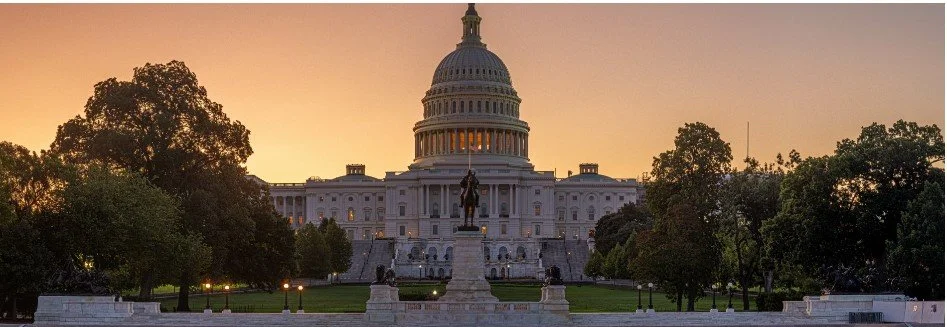
“The U.S. Senate passed the largest climate legislation in U.S. history on Aug. 7: a $370 billion package expected to drive down greenhouse gas emissions by 40%, including unprecedented incentives and investments in green buildings.
The potential outline of the climate deal has been largely known since last year, but the sudden momentum in passing it—following months of frustrating negotiations that appeared dead on several occasions—is exciting to witness.
We are days away from the bill’s expected passage in the House of Representatives on Aug. 12, before it goes to President Biden to be signed into law, triggering a decade of federal investments that aim to transform markets for energy efficiency, renewable energy and other clean energy technologies. The $370 billion in climate provisions are part of a broader health care and tax package that raises some $740 billion, more than $300 billion of which would go toward deficit reduction.
The core of the climate package is a suite of tax incentives that will be in place for a decade or more, providing a new level of economic certainty for clean energy markets. The bill includes significant expansions and extensions of tax incentives for energy efficiency improvements to homes and buildings (including the 179D, 45L and 25C incentives), renewable power generation, electric vehicles, distributed energy resources and other clean energy technologies.
It also includes billions of dollars in investments in public building upgrades, green building improvements to affordable housing and low embodied carbon construction materials. Plus, it offers tens of billions in new clean energy financing opportunities, such as Department of Energy loans, a clean tech accelerator green bank, and environmental justice and community redevelopment grants.”
Highlights of the bill include:
Commercial buildings
The bill significantly expands Sec. 179D tax deduction for commercial buildings. The 179D deduction would be increased from the current $1.80 per square foot to a sliding scale of $2.50 to $5 per square foot. For new construction, buildings would need to achieve 25% better performance than the latest ASHRAE 90.1 standard for $2.50 per square foot, with a gradually increasing deduction up to $5 for achieving 50% better performance than ASHRAE 90.1.
Existing buildings five years or older—a critical priority to achieve scale—would have a more accessible pathway to demonstrate compliance, with a similar sliding scale deduction of $2.50 to $5 per square foot by demonstrating improvement over their existing energy use intensity by 25% to 50%.
New home construction
The bill significantly expands Sec. 45L tax credit for new home construction, including multifamily. Whereas the current credit provides $2,000 for new homes meeting an outdated version of the International Energy Conservation Code (IECC), the updated credit in the new bill would offer $2,500 for homes meeting Energy Star standards and $5,000 for homes meeting zero energy–ready criteria.
Multifamily projects meeting prevailing wage requirements would receive the same incentives—a $2,500 or $5,000 credit per unit.
Affordable housing
The bill provides $1 billion in new funding to improve the sustainability of affordable housing through the Department of Housing and Urban Development. The funding would go to loans and grants for projects that “that improve energy or water efficiency, indoor air quality or sustainability, implement the use of low-emission technologies, materials, or processes, including zero-emission electricity generation, energy storage, or building electrification, or address climate resilience.” A small portion of the funding would go to data collection, energy performance benchmarking and risk assessments.
Federal buildings
The bill provides $225 million for the General Services Administration (GSA) Federal Buildings Fund to convert federal facilities to high-performance green buildings, along with $2.15 billion for installing low-embodied-carbon materials and products in federal facilities. This $2.15 billion procurement initiative is intended to help kick-start markets for sustainable construction materials. Finally, the Federal Buildings Fund would also receive $975 million for emerging and sustainable technologies.
Building energy codes
The bill provides $1 billion for building energy code adoption, with an emphasis on stretch codes. This includes $330 million in grants to help state and local governments adopt the 2021 IECC and 2019 ASHRAE 90.1 standard and $670 million for adoption of the zero energy provisions in the 2021 IECC or equivalent stretch code.
Renewables/EV/storage
The bill provides for long-term extensions and expansions of the Investment Tax Credit and Production Tax Credit supporting renewable energy generation, the EV tax credit —including $7,500 for new EVs and $4,500 for used EVs—and expansions of credits for other technologies, such as distributed energy storage, rooftop solar and geothermal.
Existing home efficiency improvements
The bill provides a significantly expanded Sec. 25C tax incentive for homeowners to make efficiency improvements, which were previously capped at $500 for a lifetime. Homeowners can now receive up to $1,200 per year for insulation projects, $600 per year for HVAC and windows, and $2,000 for installing heat pumps, among other investments.
Additionally, two new programs funded at $9 billion will be administered by state energy offices for direct rebates to homeowners for energy efficiency and electrification projects. The rebate program also includes $200 million for workforce training.
Sustainable and resilient communities
The bill includes a variety of broad, community-based investments to improve sustainability and resilience, including
$7 billion in grants and other funding to enable low-income and disadvantaged communities to benefit from zero-emissions technologies such as distributed energy resources and to implement other greenhouse gas (GHG) reduction activities.
$50 million to address indoor air quality and GHG emissions at schools in low-income and disadvantaged communities.
$5 billion for GHG reduction planning and implementation grants from the U.S. EPA.
$3 billion for environmental and climate justice block grants.
$3 billion for a neighborhood access and equity grant program at the Department of Transportation to help states and local governments improve walkability, safety and affordable transportation access, including by removing existing transportation infrastructure that adversely impacts communities.
$2.6 billion to help coastal communities, including preparation for extreme storms and other changing climate conditions.
$27 billion for a clean energy technology accelerator program to stimulate emissions-reducing technologies.
ESG, EPD and low-embodied-carbon materials
The bill provides $250 million for the EPA to support the development, standardization and transparency of environmental product declarations, along with $5 million for similar efforts around corporate climate commitments. Additionally, there is $100 million for the EPA to work with the Department of Transportation and GSA to develop a program to identify and label low-embodied-carbon construction materials and products
While this is an exciting breakthrough after months of frustrating negotiations, it remains an agreement in principle that needs to pass Congress, which requires all 50 Democrats in the Senate and a similarly narrow margin for error in the House of Representatives. If all goes well, that process is now expected to play out over the next couple of weeks, with the potential for President Biden signing it into law in August.